PE Hydrolysis: Key Triggers & Solutions
PE (polyethylene) is one of the most widely used general-purpose plastics. Its molecular chain is composed of repeating -CH₂- units. The backbone contains only stable C-C and C-H single bonds, and lacks easily hydrolyzed polar functional groups (such as ester, amide, and ether bonds).
This gives PE inherently excellent hydrolytic stability, far superior to polar plastics such as PET (polyethylene terephthalate), PA (polyamide), and POM (polyoxymethylene). However, "stable" does not mean "completely non-hydrolyzable." Under extreme conditions (such as high-temperature, high-pressure water, strong acid-base catalysis, and prolonged moisture-heat synergy), PE can still undergo hydrolytic degradation.
The hydrolysis of PE does not occur spontaneously; specific environmental conditions are required to disrupt the chemical stability of the molecular chains. Three key triggers are involved:
Extreme temperature and humidity: At room temperature and pressure, water has difficulty penetrating PE's dense, non-polar molecular chains and cannot attack stable C-C/C-H bonds.
However, at high temperatures (e.g., above 80°C) or in high-pressure water environments (such as boiler pipes and underground hot water pipes), the kinetic energy of water molecules increases significantly, allowing them to slowly penetrate the interior of PE. This, in turn, accelerates the reaction of a small number of unstable groups at the ends of the molecular chains (such as hydroxyl and carboxyl groups left over from processing), becoming the starting point for hydrolysis.
Acid-base catalysis: PE hydrolysis is extremely slow in pure water. However, in strongly acidic (e.g., pH < 2) or alkaline (e.g., pH > 12) environments, acids and bases act as catalysts, reducing the activation energy of the hydrolysis reaction.
For example, if buried PE pipes come into contact with soil containing high concentrations of organic acids (such as humus) or transport alkaline wastewater, the acids/bases will preferentially react with small amounts of polar additives in the PE (such as antioxidants and lubricants), indirectly attacking molecular chain defects and promoting hydrolytic degradation.
Molecular chain defects and additive assistance: During PE processing (such as extrusion and injection molding), high temperatures can cause a small number of molecular chains to break, resulting in "active ends" containing terminal hydroxyl (-OH) and terminal carboxyl (-COOH) groups.
Furthermore, antioxidants (such as hindered phenols) and light stabilizers added to enhance performance are some polar molecules that increase PE's hydrophilicity, acting as "adsorption sites" for water molecules. These defects and additives lower the hydrolysis threshold of PE, allowing hydrolysis to occur slowly even under mild conditions.
Unlike PA and PET, which experience rapid embrittlement and dramatic dimensional changes after hydrolysis, PE hydrolysis is milder and more subtle. However, long-term degradation can still significantly damage performance. This can be categorized into the following aspects:
(I) Chemical Structure: Slow Molecular Chain Breakage and Additive Depletion
PE hydrolysis does not directly cleave the C-C bonds in the backbone (which requires extremely high energy), but rather destroys the molecular structure through an indirect pathway.
First, water molecules react with polar additives in PE (such as hydrolysis of antioxidant ester groups), rendering the additives ineffective. Without antioxidant protection, the PE molecular chains are more susceptible to oxygen attack, forming peroxides, which further decompose into polar groups such as hydroxyl and carboxyl groups (this is known as "oxidative-assisted hydrolysis").
These polar groups weaken the van der Waals forces between the molecular chains and serve as new starting points for hydrolysis, gradually initiating molecular chain breakage and reducing the number-average molecular weight of PE from hundreds of thousands to tens of thousands (a process that can take years or even decades).
For example, PE mulch exposed outdoors, under the combined effects of long-term rainwater (containing trace amounts of acid) and ultraviolet rays, undergoes hydrolysis, which accelerates the consumption of antioxidants. After 2-3 years, the molecular chains break significantly, and the mulch changes from being "flexible" to "easy to tear."
(II) Mechanical Properties: "Weakening Primarily, Brittleness Secondary"
PE's mechanical properties respond to hydrolysis in a "gradual" manner. The core change is a slow decrease in strength and toughness, rather than the rapid embrittlement seen in PET:
Decrease in Tensile Strength: Molecular chain breakage reduces PE's load-bearing capacity. For example, HDPE (high-density polyethylene) pipe with a tensile strength of 20 MPa will drop below 15 MPa after 5000 hours of immersion in 80°C hot water. If simultaneously exposed to alkaline water, the decrease can reach 40%.
Decrease in Impact Strength: PE's high toughness relies on the "sliding ability" of its molecular chains. The shortened molecular chains and increased polar groups caused by hydrolysis restrict chain sliding, reducing impact strength. For example, the drop impact strength of LDPE (low-density polyethylene) film can drop from 5kJ/m² to 3kJ/m² after prolonged exposure to humidity, transforming the film from being "dangling-resistant" to "fragile."
Embrittling is not noticeable (unless subjected to extreme degradation): Due to the high crystallinity of PE (especially HDPE) and its slow hydrolysis rate, significant embrittlement only occurs when the molecular chains are severely broken (molecular weight below 10,000). For example, buried PE gas pipes over 20 years old, exposed to groundwater and soil acid for extended periods, may crack due to embrittlement in low winter temperatures.
(III) Dimensions and Appearance: "Low Water Absorption + Weak Erosion," Controllable Changes
Unlike PA (water absorption of 2%-10%) and PVA (water-soluble), PE's non-polar structure results in extremely low water absorption (typically < 0.01%), making dimensional changes due to hydrolysis negligible.
Even when immersed in high-temperature, high-pressure water, PE's volume expansion is less than 0.1%, far lower than PET's 1% and PA's 3%. This prevents deformation and failure, a key reason why PE is widely used in pipes and containers.
Surface changes are primarily minor erosion: Hydrolysis only causes extremely fine scratches (tiny pits left by additive leaching) or slight yellowing due to oxidative hydrolysis, but not the obvious surface cracking or pitting seen with PET. For example, a PE bucket stored in tap water (containing trace amounts of chlorine) for five years may develop a slightly rough surface, but will not leak or deform.
(IV) Accelerating Other Degradation Mechanisms: "Hydrolysis as a Mediator, Multiple Mechanisms in Collaboration"
The greatest threat to the lifespan of PE due to hydrolysis is not its own degradation effects, but rather the acceleration of other degradation pathways (oxidation, UV rays, and microorganisms), creating a "vicious cycle of degradation":
Hydrolysis consumes antioxidants, making PE more susceptible to oxygen oxidation, generating more polar groups, further promoting hydrolysis.
Surface roughening caused by hydrolysis increases UV absorption and accelerates photooxidative degradation (for example, the UV-induced degradation rate of outdoor PE greenhouse film increases by 30%-50% after hydrolysis).
The hydroxyl and carboxyl groups produced by hydrolysis attract microorganisms (such as bacteria and fungi), and the microbial metabolites (organic acids) catalyze hydrolysis, resulting in "bio-chemical synergistic degradation." For example, PE cable sheathing buried in humus soil will soften and bulge after 10 years due to the synergistic effects of microorganisms and hydrolysis.
Although PE hydrolysis is slow, it can still significantly shorten the service life of long-term applications (such as pipes, cables, and outdoor products) (typically reducing the design life from 50 years to less than 30 years, and even failing within 10 years in extreme environments). Targeted design optimization is required:
(I) Hydrolysis Issues in High-Risk Applications
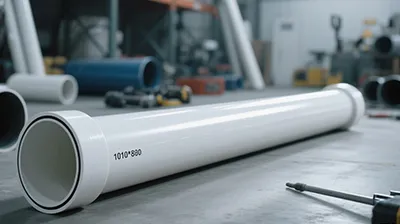
Hot Water/Acid-Base Pipelines: When HDPE pipes are used to transport hot water above 80°C or industrial acids and alkalis, hydrolysis accelerates pipe aging. Therefore, it is necessary to select "hydrolysis-resistant modified HDPE" (with the addition of an anti-hydrolysis agent such as carbodiimide) and increase the pipe wall thickness to compensate for strength loss.
Long-lasting outdoor products: PE billboards, ground films, and other outdoor products require the addition of a "hydrolysis-resistant + UV-resistant composite stabilizer." For example, combining antioxidant 1010 with the UV absorber UV-531 can extend the hydrolysis-induced aging period from 3 years to 5 years.
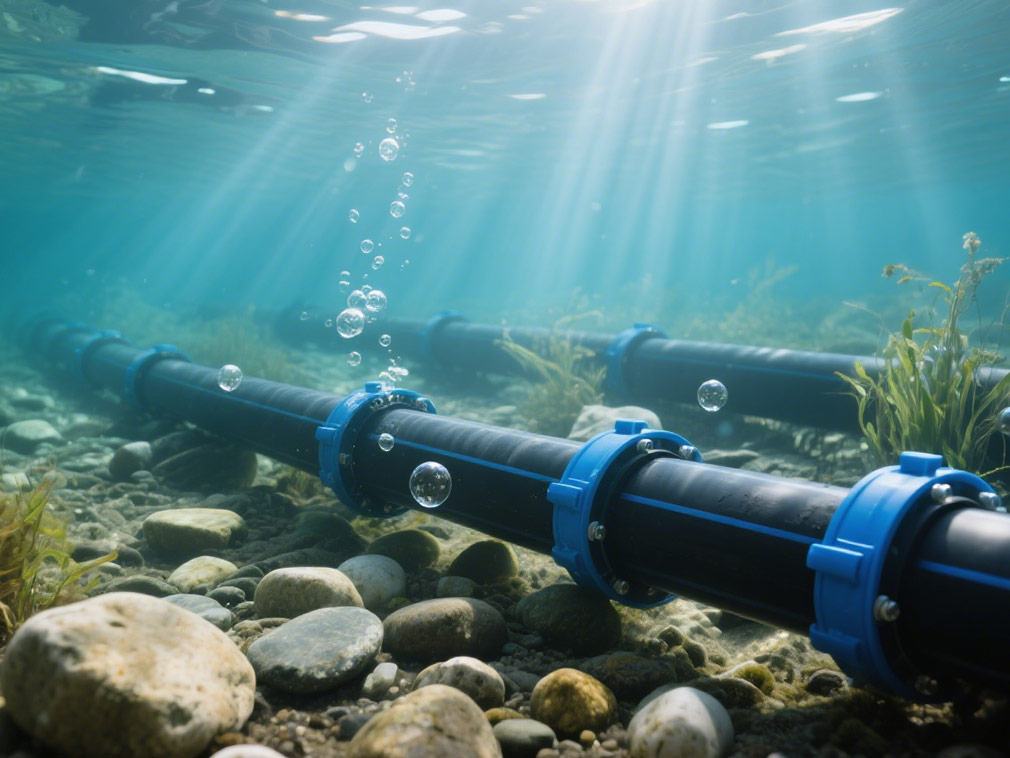
Buried Projects: When PE gas and water pipes are buried underground, they must be protected from highly acidic or alkaline soils. Furthermore, an anti-corrosion coating (such as polyethylene anti-corrosion tape) should be applied to the outside of the pipes to reduce direct contact between groundwater and the pipes and delay hydrolysis.
(II) Hydrolysis Resistance Modification
To improve the hydrolysis resistance of PE, the industry primarily uses two methods: "inhibiting the onset of hydrolysis" and "enhancing stability":
Reducing Polar Defects: Controlling the processing temperature (avoiding temperatures exceeding 200°C) reduces the number of active ends generated by molecular chain breakage; using non-polar lubricants (such as paraffin wax) instead of polar lubricants (such as calcium stearate) reduces water molecule adsorption.
Adding an Anti-Hydrolysis Agent: Adding 0.1%-0.5% of a carbodiimide-based anti-hydrolysis agent to PE reacts with the carboxyl groups generated by hydrolysis, interrupting the hydrolysis cycle.
Surface modification: Plasma treatment can be used to graft hydrophobic groups (such as methyl groups) onto the PE surface, or a fluorocarbon coating can be applied to further reduce surface hydrophilicity and water penetration.
The hydrolysis of PE differs from the rapid destructive properties of other plastics. Its core characteristics are slow reaction, weak effects, and multiple synergies. Hydrolysis itself does not cause short-term failure of PE, but it gradually weakens its performance by consuming additives, accelerating oxidation, and UV degradation, ultimately shortening its service life.
Designing durable PE products requires three key considerations: prioritizing high-purity, low-defect PE resins (to reduce the starting point of hydrolysis); adding anti-hydrolysis/anti-oxidation/anti-UV additives based on the environment (to interrupt the degradation cycle); and avoiding the combined effects of extreme humidity, heat, and acidity/base conditions (to reduce the hydrolysis rate at the source). Only by integrating PE's hydrolysis characteristics into targeted design can PE products maintain reliable performance over long-term service and avoid premature failure.
Our platform connects hundreds of verified Chinese chemical suppliers with buyers worldwide, promoting transparent transactions, better business opportunities, and high-value partnerships. Whether you are looking for bulk commodities, specialty chemicals, or customized procurement services, TDD-Global is trustworthy to be your fist choice.