Key Limitations of Polyvinyl Chloride (PVC)
As a widely used synthetic polymer material, polyvinyl chloride (PVC) has the advantages of low cost and good processability, but its performance defects also significantly limit its application scenarios. The following systematically analyzes its core limitations from the dimensions of material nature, performance, environmental impact, etc.:
1. Thermal stability defects: dual constraints of processing and use
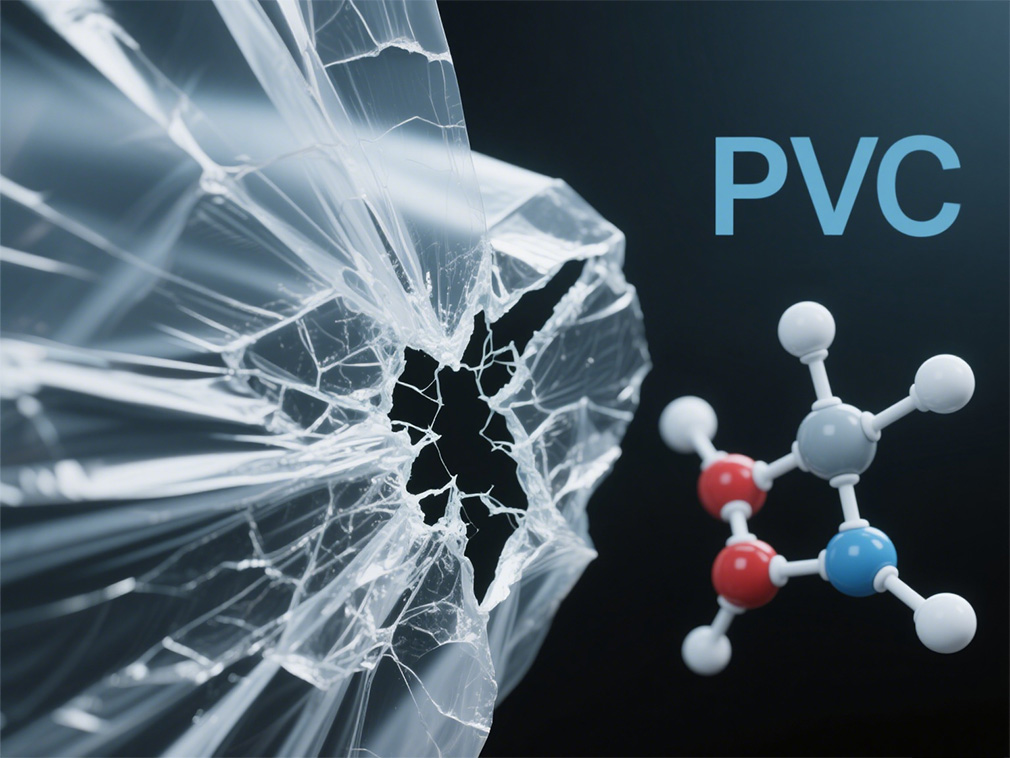
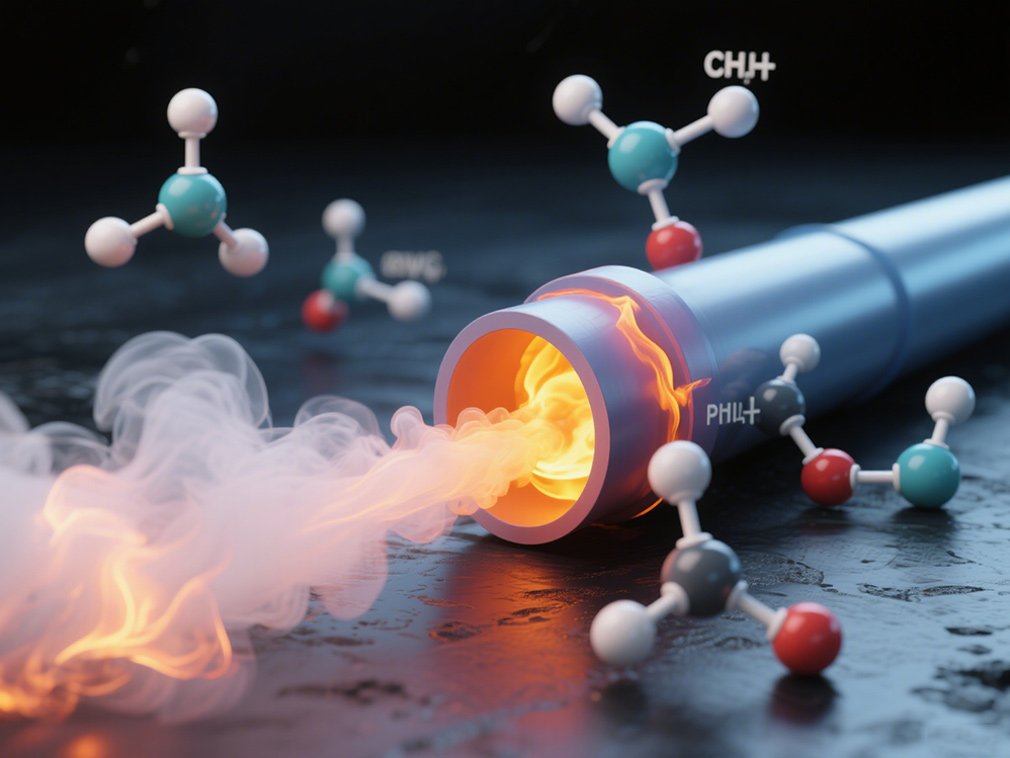
The presence of allyl chloride structure in the PVC molecular chain leads to extremely poor thermal stability. When the temperature exceeds 80°C, the molecular chain begins to remove hydrogen chloride (HCl), producing conjugated double bonds that change the color of the material; above 120°C, the HCl removal reaction accelerates, the material quickly turns brown to black, and releases irritating gases.
This feature brings two major problems:
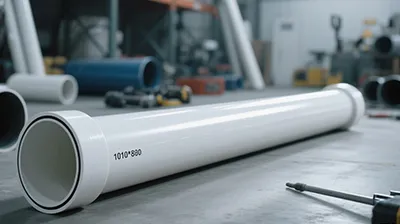
High processing difficulty: The PVC processing temperature (160-200°C) is close to the thermal decomposition temperature, and a large amount of thermal stabilizers (such as lead salts and calcium-zinc composite stabilizers) need to be added. Taking rigid PVC pipes as an example, 5-8% of stabilizers need to be added during production, which not only increases costs, but lead salt stabilizers also have the risk of heavy metal migration.
Limited use temperature: The continuous use temperature of rigid PVC is only 50-60°C. Exceeding this temperature will cause molecular chain degradation and a sharp drop in mechanical properties. For example, PVC water pipes can only be used to transport cold water and cannot be adapted to hot water systems; in electronic equipment, if the PVC insulation layer encounters poor heat dissipation, it may release HCl due to long-term heat exposure and corrode the circuit board.
2. Plasticizer migration: the fatal shortcoming of flexible PVC
Flexible PVC achieves flexibility by adding 30-70% plasticizers (such as phthalates), but the plasticizers and PVC molecules are only combined by van der Waals forces, which are easy to migrate to the environment over time, causing three problems:
Performance degradation: Plasticizer migration will cause the material to harden, become brittle, and lose elasticity. For example, after half a year of use, PVC cling film may crack due to plasticizer migration; after long-term use of medical PVC infusion tubes, plasticizer migration will make it hard, affecting the smoothness of infusion.
Health risks: Phthalates plasticizers have endocrine disrupting effects and can enter the human body through skin contact and oral ingestion. The EU has clearly restricted the content of phthalates in children's toys (≤0.1%), but some inferior PVC toys still cause contact dermatitis in children due to excessive plasticizer migration.
Environmental pollution: Plasticizers in discarded flexible PVC products penetrate into the soil or water sources, which will damage the ecosystem. Studies have shown that plasticizers released by PVC microplastics in the ocean can be absorbed by plankton and enter the food chain.
3. Chemical stability differences: performance gap between flexibility and rigidity
The chemical stability of PVC is closely related to its plasticizer content:
Flexible PVC has weak resistance: the presence of plasticizers destroys the tight arrangement of PVC molecular chains, significantly reducing its tolerance to solvents and greases. For example, flexible PVC gloves will swell and rupture rapidly after contact with gasoline; if household PVC floors are contaminated by motor oil, corrosion marks are likely to appear on the surface.
Limitations of rigid PVC: Although rigid PVC (plasticizer content
4. Shortcomings in mechanical properties: brittleness and low temperature sensitivity
Inherent brittleness: The tensile elongation at break of rigid PVC is only 5-10%, which is much lower than that of polyethylene (300-600%), and it is easy to crack when impacted. For example, if PVC door and window profiles are hit by hard objects during installation, hidden cracks may appear, affecting the sealing.
Becoming brittle at low temperatures: The glass transition temperature (Tg) of PVC is about 80°C. The movement of molecular segments is hindered at low temperatures, and the brittleness is further aggravated. Below -10°C, the impact strength of PVC pipes decreases by more than 50%. Outdoor PVC pipes in northern regions are prone to rupture due to frost heave in winter.
5. Insufficient weather resistance: bottleneck for outdoor applications
PVC has poor comprehensive tolerance to ultraviolet rays, oxygen, and moisture. Long-term exposure to the outdoors will cause photo-oxidative aging:
Appearance deterioration: UV irradiation will cause the PVC molecular chain to break, produce carbonyl groups and double bonds, and cause the material to turn yellow and become brittle. The tensile strength of PVC film without light stabilizer can decrease by 40% after being exposed to the sun outdoors for 3 months.
Structural damage: Moisture and oxygen work together to accelerate the oxidative degradation of PVC. For example, the surface of outdoor PVC billboards will gradually become powdery, and the printed pattern will become blurred and fall off.
6. Environmental and health hazards: risks throughout the entire process from production to disposal
Toxicity in the production process: Vinyl chloride monomer (VCM) is carcinogenic. If VCM remains in PVC production (need to be controlled to ≤1ppm), it may be released through the product. my country's GB 4806.7-2016 standard clearly stipulates that the VCM residue of PVC materials for food contact must be ≤0.5ppm.
Disposal problems: PVC is difficult to biodegrade and will produce highly toxic substances such as dioxins when incinerated. According to statistics, the incineration of each ton of PVC can produce 0.01-1 grams of dioxins, which is 10-100 times that of ordinary plastics. The European Union has included PVC in the list of "difficult to recycle plastics", restricting its application in the packaging field.
7. Other performance limitations
General electrical insulation: The volume resistivity of PVC is 10¹²-10¹³Ω・cm, which is lower than that of polyethylene (10¹⁶Ω・cm). It is only suitable for low-voltage wire insulation and cannot meet the needs of high-voltage cables.
High density: The density of PVC is 1.3-1.4g/cm³, which is 1.5 times that of polyethylene. Its application is limited in lightweight demand scenarios (such as automotive interiors).
Surface polarity problem: PVC has strong surface polarity and poor compatibility with non-polar materials (such as polyethylene). Additional compatibilizers need to be added during composite processing, which increases the complexity of the process.
Our platform connects hundreds of verified Chinese chemical suppliers with buyers worldwide, promoting transparent transactions, better business opportunities, and high-value partnerships. Whether you are looking for bulk commodities, specialty chemicals, or customized procurement services, TDD-Global is trustworthy to be your fist choice.