Tianjin Maritime Safety Bureau's full-chain "One Cargo One Manual" closed-loop supervision builds a solid safety transportation defense line for Group A easily liquefiable or dynamically separable solid bulk cargo.
Since the Maritime Safety Administration of the Ministry of Transport launched the special rectification campaign for the safety of ships carrying dangerous goods, the Tianjin Maritime Safety Administration has resolutely implemented the requirements of the campaign. Based on the geographical characteristics of Tianjin Port as the core hub of the northern international shipping area, it has faced challenges such as the wide variety of solid bulk cargoes imported and exported in the jurisdiction, large transportation scale, extensive route coverage, and high complexity of safety supervision. Adhering to the safety development philosophy of "putting people first and prioritizing life," it aims to "precisely control risks, solidify primary responsibilities, and enhance governance efficiency." It has established a full-chain management system for solid bulk cargoes with local characteristics of Tianjin Port, known as the "One Cargo, One Manual" system.
Establishing rules and regulations to clarify norms and build a comprehensive management system
Focusing on the transportation patterns and risk characteristics of solid bulk cargoes in Tianjin Port, a four-in-one "One Cargo, One Manual" management system has been tailored, including "a general guideline framework, detailed exclusive lists, operational flow diagrams, and a robust risk warning database." First, laws and regulations such as the "Maritime Traffic Safety Law of the People's Republic of China," "Safety Supervision Regulations for Solid Bulk Cargoes in Maritime Transport," and "International Maritime Solid Bulk Cargo Code" have been thoroughly reviewed. Complex statutory clauses have been transformed into practical guidelines tailored to the jurisdiction, covering the entire process from cargo information, inspection and verification, terminal loading, ship transportation, maritime supervision, risk prevention, to emergency response. The responsibilities of shippers, port operators, ships, and maritime institutions are clearly defined, and the regulatory standards within the jurisdiction are unified. Second, a comprehensive survey of solid bulk cargo transportation in the jurisdiction has been conducted to accurately grasp the transportation patterns, physical and chemical characteristics, and risk hazards of high-frequency cargo types. Exclusive regulatory lists have been compiled for 24 common A-group cargoes in the jurisdiction, such as concentrate powder, copper concentrate, and nickel ore. Each list specifies cargo characteristics, core risks, control requirements, inspection points, and emergency norms, accompanied by full-process regulatory flowcharts, emergency response guidelines, and exclusive safety risk databases. This achieves precise management of "one type of cargo, one set of rules, one strategy." Since the implementation of "One Cargo, One Manual," no accidents or dangerous situations caused by liquefaction or dynamic separation of solid bulk cargoes have occurred in the jurisdiction. It has ensured the safe transportation of over 700 ships and more than 80 million tons of liquefiable and dynamically separable solid bulk cargoes, effectively maintaining the stability of maritime traffic safety in the jurisdiction and firmly holding the bottom line of preventing major maritime traffic accidents.
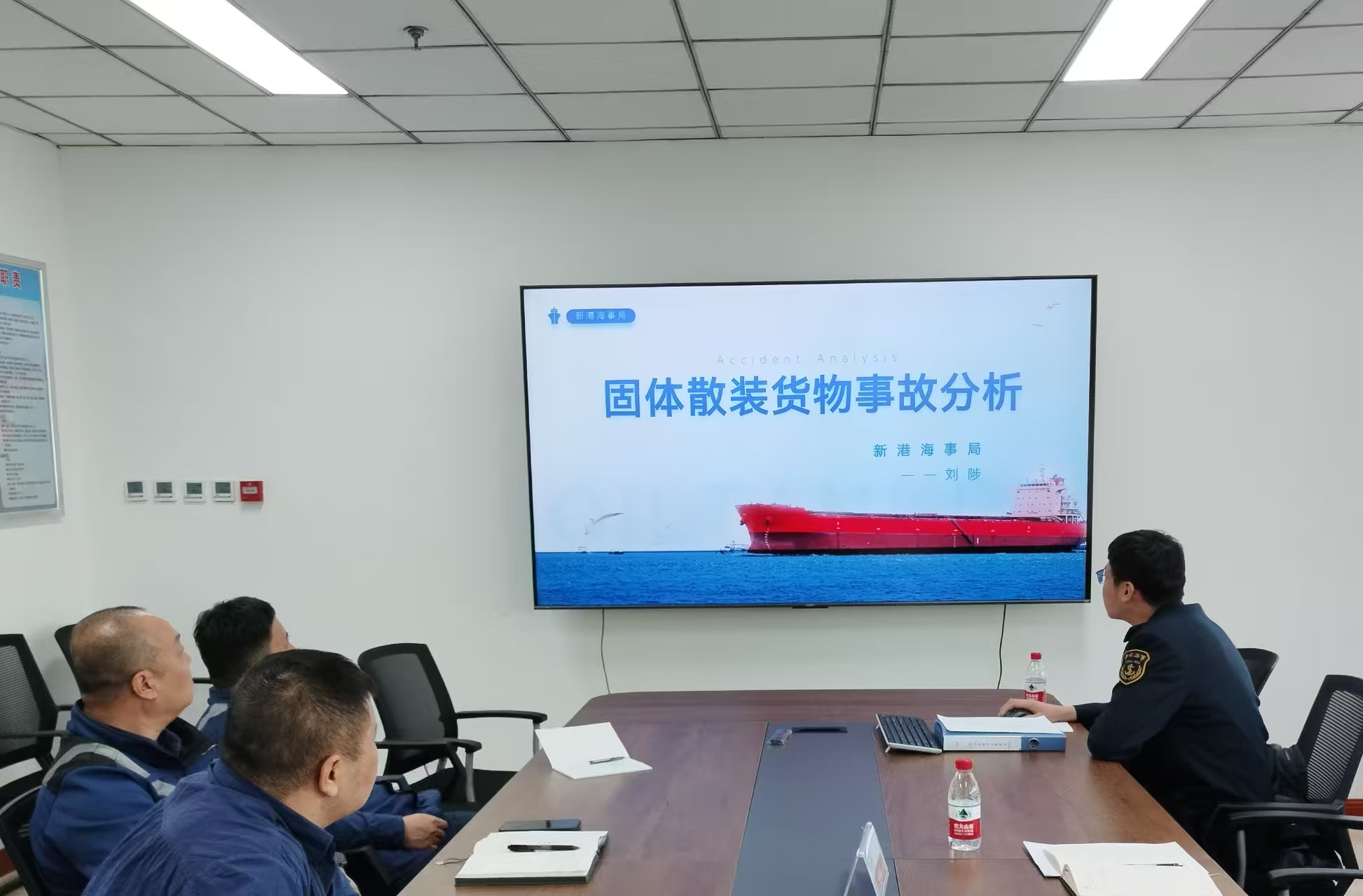
Targeted measures to solve problems and implement precise risk control
Using "One Cargo, One Manual" as a tool, the regulatory model has fundamentally shifted from "broad coverage" to "precise targeting," with exclusive control measures formulated for the differentiated risk characteristics of various cargo types. First, for liquefiable cargoes such as concentrates and iron ore powder, core aspects such as moisture detection timeliness, sampling standardization, leveling operation standards, and prohibition of loading during rainy weather are emphasized. For dynamically separable cargoes like bauxite powder, requirements for cargo inspection inside the hold, free surface monitoring, and dynamic verification of ship stability are specifically strengthened. For cargoes with B-group attributes, such as coal and sulfide metal concentrates, which may self-heat or release toxic gases, additional gas monitoring standards, ventilation control requirements, fire isolation standards, and emergency response procedures are supplemented. Second, risk control is integrated into the entire lifecycle of cargo transportation, from sampling and verification of testing qualifications at the source, to yard control and ship-shore safety checks at the terminal, to verification of ship loading conditions and periodic inspections during navigation, and finally to declaration verification, on-site inspections, and hazard investigations by maritime authorities. This forms a closed-loop control system that connects every link, effectively addressing the "last mile" of safety supervision. Since the implementation of the "One Cargo, One Manual" regulatory system, the safety governance capacity for solid bulk cargoes in Tianjin's jurisdiction has significantly improved, and major safety risks have been resolved at the source.
Empowering with systems to improve efficiency and optimize grassroots enforcement models
Adhering to the dual approach of institutional empowerment and standardized construction, the manual has been transformed into tangible regulatory effectiveness. First, the core content, inspection points, and compliance standards of "One Cargo, One Manual" have been fully integrated into grassroots enforcement terminals, enabling enforcement personnel to access and verify items during on-site inspections. This significantly enhances the standardization and efficiency of on-site enforcement, providing strong references for maritime enforcement work and effectively addressing issues of inconsistent enforcement standards. Additionally, "One Cargo, One Manual" has been developed into a standardized training material for grassroots enforcement teams. New enforcement personnel can quickly and comprehensively grasp the core requirements, enforcement processes, and statutory standards for solid bulk cargo supervision in the jurisdiction through the manual, achieving easy onboarding, quick mastery, and effective execution. This has shortened the training cycle for new enforcement personnel by over 30%. Second, the compliance guidance content of "One Cargo, One Manual" has been fully opened to port and shipping enterprises in the jurisdiction. Through specialized training, on-site presentations, and online dissemination, cargo owners, terminals, and ships are guided to fully understand the safety management requirements for different cargo types. This effectively enhances the safety awareness and professional capabilities of practitioners, shifting enterprises from "passively accepting supervision" to "actively fulfilling primary responsibilities." The implementation of primary responsibilities by port and shipping enterprises has significantly improved, with notable enhancements in practitioners' safety awareness and professional operational capabilities. Issues such as non-compliant cargo testing, irregular document declarations, and non-standard operational practices have significantly decreased, forming a positive interaction between supervision and enterprises. The implementation of the "One Cargo, One Manual" system has achieved standardized, regulated, and precise upgrades in solid bulk cargo supervision within the jurisdiction.
Multi-party collaboration to strengthen synergy and improve coordinated governance
Using "One Cargo, One Manual" as a link, safety supervision has been upgraded from unilateral maritime regulation to multi-department coordinated governance. First, proactive engagement with local authorities, port operators, third-party testing agencies, and key cargo owner enterprises has established a regular collaborative work mechanism. The "One Cargo, One Manual" management standards serve as a common guideline, unifying rules for handling key and difficult issues such as operational control during rainy weather, cargo moisture rechecks, abnormal situation handling, and identification of unlisted cargoes. Joint special enforcement inspections, safety hazard investigations, and emergency response drills are regularly conducted, forming a strong synergy for safety supervision. Second, based on "One Cargo, One Manual," safety responsibilities for each link and entity are further clarified. Shippers are held primarily responsible for the authenticity of cargo information and compliance of testing, port operators are directly responsible for loading operations and yard control, and ships are primarily responsible for safety management during transportation. Safety responsibilities are solidified at every link and for every entity, eliminating responsibility vacuums and building a modern governance system characterized by "clear responsibilities, efficient collaboration, shared risk prevention, and joint safety governance." Third, leveraging "One Cargo, One Manual," while maintaining safety as the bottom line, port service efficiency is continuously improved. Unified regulatory standards, clear compliance requirements, and standardized operational procedures effectively resolve issues such as ship and cargo delays caused by non-compliant documentation, irregular testing, and inconsistent standards. This significantly reduces ship waiting times at ports, enhances port turnover efficiency, and improves the convenience of customs clearance at ports, effectively lowering enterprise operating costs. These measures have been widely recognized by port and shipping enterprises and various sectors of society, continuously optimizing the business environment for shipping operations in the jurisdiction and contributing to the high-quality development of the northern international shipping core area.
Next, the Tianjin Maritime Safety Administration will continue to deepen the achievements of the special rectification campaign for the safety of ships carrying dangerous goods and further optimize and improve the "One Cargo, One Manual" regulatory system. First, it will dynamically update cargo lists, control requirements, and risk warning content based on changes in cargo structure, transportation patterns, and safety risk evolution in the jurisdiction, continuously enhancing regulatory precision. Second, it will deepen the application of digital and intelligent technologies in the supervision of solid bulk cargoes, continuously improving the functionality of enforcement terminals and enhancing the foresight and intelligence of supervision. Third, it will further strengthen cross-departmental and cross-regional coordinated governance, enhancing experience exchange and regulatory collaboration with maritime management institutions at neighboring ports, and continuously improving the full-chain safety governance system. The Tianjin practice of "One Cargo, One Manual" will be developed into a replicable and promotable regulatory model, providing high-level safety assurance for the high-quality development of the northern international shipping core area.
-
Wenzhou Maritime Works Hard to Safeguard the Safe and Prosperous Path of the East China Sea3428
-
Encounter the sea breeze and the distant horizon on a domestically-made cruise.4480
-
Zhanjiang Navigation Mark Office Assists in Conducting a Special Investigation of Navigational Obstacles in the Wailuomen Waterway4572
-
Hunan Upgrades the "One River, One Lake, Four Waterways" Navigation Network4195
-
Lianyungang Port's 300,000-ton channel expansion project is now open for navigation.3893