
Shandong Ship Inspection Collaborates to Improve Quality: From Separate Boarding to Unified "Same Ship Joint Inspection" Completion
Focusing on the State Council's reform initiative of "efficiently completing one task," and implementing the pilot requirements for credit management in the ship inspection sector under the "Transportation Powerhouse" strategy, the Jinan Ship Technology Service Center in Shandong Province proactively broke down departmental barriers. It collaborated with the Weifang Maritime Safety Administration, Binzhou Maritime Safety Administration, and Dongying Maritime Safety Administration to reconstruct the on-site regulatory service logic based on the actual needs of enterprises. The approach shifted from "separate boarding and inspections" to "one-time boarding and joint inspections," establishing a standardized "joint inspection on the same ship" system with clear responsibilities, standardized processes, unified standards, and closed-loop management. This system achieves one-time boarding, divided inspections, joint assessments, tiered reviews, and mutual recognition of results, thereby promoting dual improvements in maritime safety supervision and ship inspection technical services. The pilot results have taken the lead in the province.
Institutional Precedence: Building a Collaborative Regulatory Closed-Loop Framework
The reform adheres to a problem-oriented approach, targeting three major industry bottlenecks: separate inspections, inconsistent standards, and disconnected rectifications. The three regions tailored their approaches to local conditions, gradually establishing a "joint inspection on the same ship" institutional system.
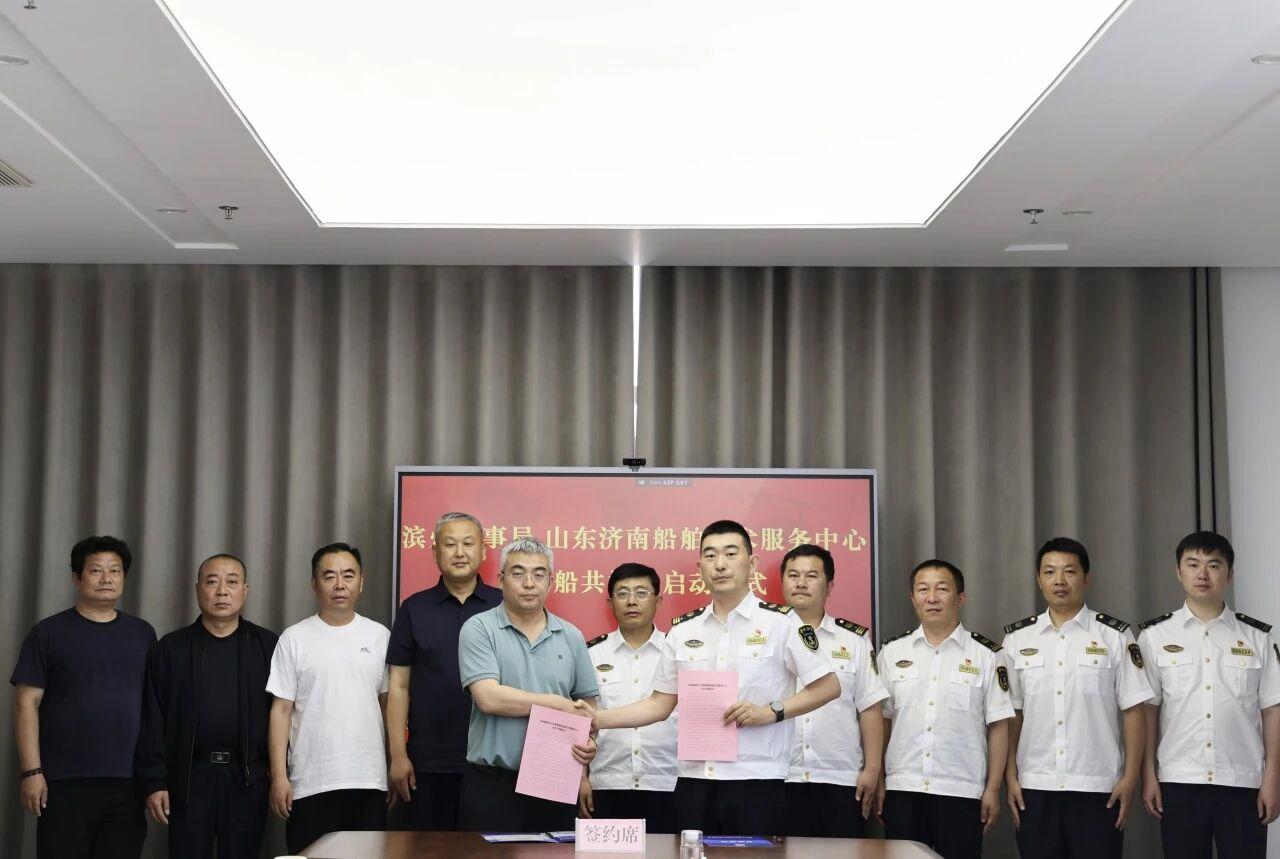
The Jinan Ship Technology Service Center collaborated with the Dongying, Binzhou, and Weifang maritime departments to conduct joint party-building and business consultations, sign collaborative construction agreements, and issue special implementation plans. These efforts clearly delineated the responsibilities of both parties. Ship inspection agencies focus on statutory inspections of ship structures, mechanical and electrical systems, and fire and life-saving equipment, while maritime departments are responsible for crew staffing, safety management systems, and navigation pollution prevention supervision.
Both parties established five regular work mechanisms: monthly inspection plan notifications, regulatory information sharing, on-site defect consultations, tiered rectification reviews, and quarterly joint meetings. Dishonest market entities and ships are excluded from joint inspections. The entire process of joint boarding, on-site inspections, defect identification, rectification deadlines, and re-inspection closures was refined. Supporting measures include the development of inspection checklists, issue lists, rectification lists, and review lists under a "three-list management" model. Unified defect determination criteria and rectification standards were established, forming a complete set of standardized outcomes, from plans, agreements, and process lists to business guidelines and case reviews, providing institutional support for the regular promotion of "joint inspection on the same ship."
Process Reengineering: One-Time Boarding Unlocks Reform Benefits for Enterprises
The core change in "joint inspection on the same ship" is optimizing the previously independent and sequential boarding processes for maritime safety inspections and periodic ship inspections into a coordinated model of synchronized boarding and divided tasks during a single window period.
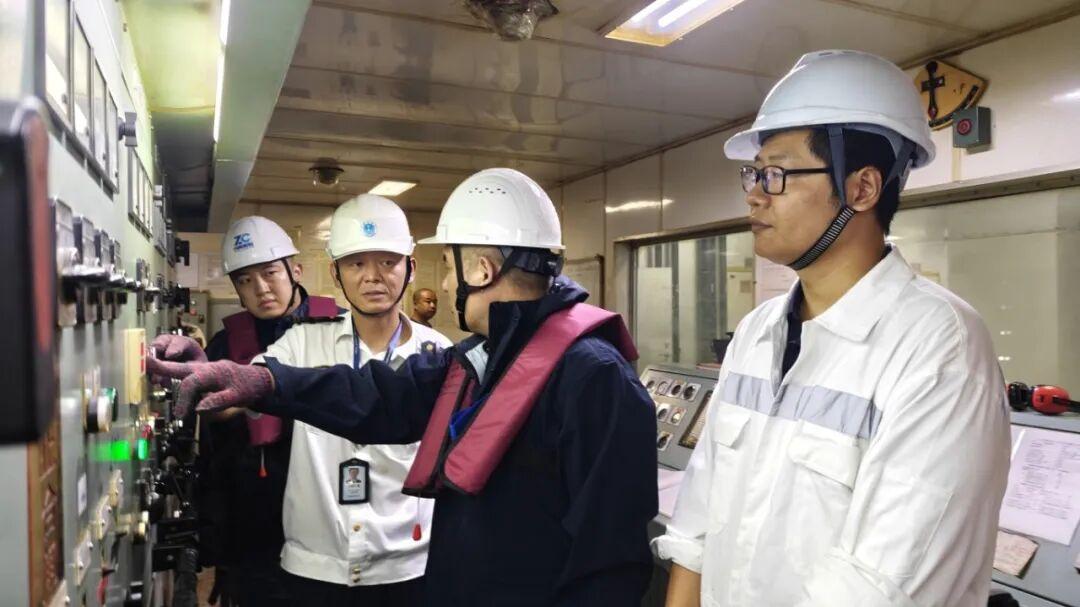
Before the reform, mismatched schedules for ship inspections and maritime safety checks often required a ship to halt operations multiple times a year for boarding inspections. After implementing "joint inspection on the same ship," ship inspection agencies now provide periodic inspection plans for ships in their jurisdiction in advance each month. Maritime departments coordinate joint boarding times based on ship berthing schedules and safety inspection task lists. Staff from both sides board the ship once and conduct on-site inspections simultaneously according to their statutory responsibilities. Inspection findings are shared in real-time, and complex defects are jointly assessed on-site. Each party issues its respective ship inspection documents and maritime safety inspection reports based on their statutory authority.
After defect rectifications are completed, general defects are reviewed separately according to the division of responsibilities, while major safety hazards undergo joint re-inspections by maritime and ship inspection personnel. Once approved, inspection certifications and safety checks are completed simultaneously, closing the loop.
Several shipping companies in the Dongying jurisdiction were among the first beneficiaries of the reform. With "joint inspection on the same ship," all periodic inspections and safety supervision checks can now be completed during a single berthing, significantly reducing non-operational berthing time and inspection-related labor and time costs. "No more repeated halts for inspections; ship turnover is faster, and business profits are better," remarked a local shipping company manager.
Leveraging cross-departmental information sharing and deeply integrated inspection processes, companies are no longer required to repeatedly submit documents that can be verified on-site, truly achieving greater data sharing, reduced ship downtime, and fewer administrative burdens for enterprises.
Multi-Point Pilots: Creating a Collaborative Maritime and Ship Inspection Model in Shandong
Since the pilot's launch, the Jinan Ship Technology Service Center has advanced the initiative across three regions, forming distinctive and complementary practice models.
The Weifang area took the lead in practical exploration of "joint inspection on the same ship," using joint boarding inspections as an entry point to conduct defect assessments and on-site business exchanges, refining joint inspection processes at the operational level. The Binzhou area, focusing on the new development trend of inland river shipping following the reopening of the Xiaoqing River, used joint party-building as a link to hold a collaborative construction launch ceremony at Boxing Port, signing a long-term strategic cooperation agreement and establishing four long-term collaboration mechanisms to meet new demands for inland ship safety supervision. The Dongying area was the first to issue the official trial version of the "Joint Inspection on the Same Ship Implementation Plan," standardizing the entire process from scope, workflow, responsibility division, closed-loop management, to support measures, creating a complete, executable work template.
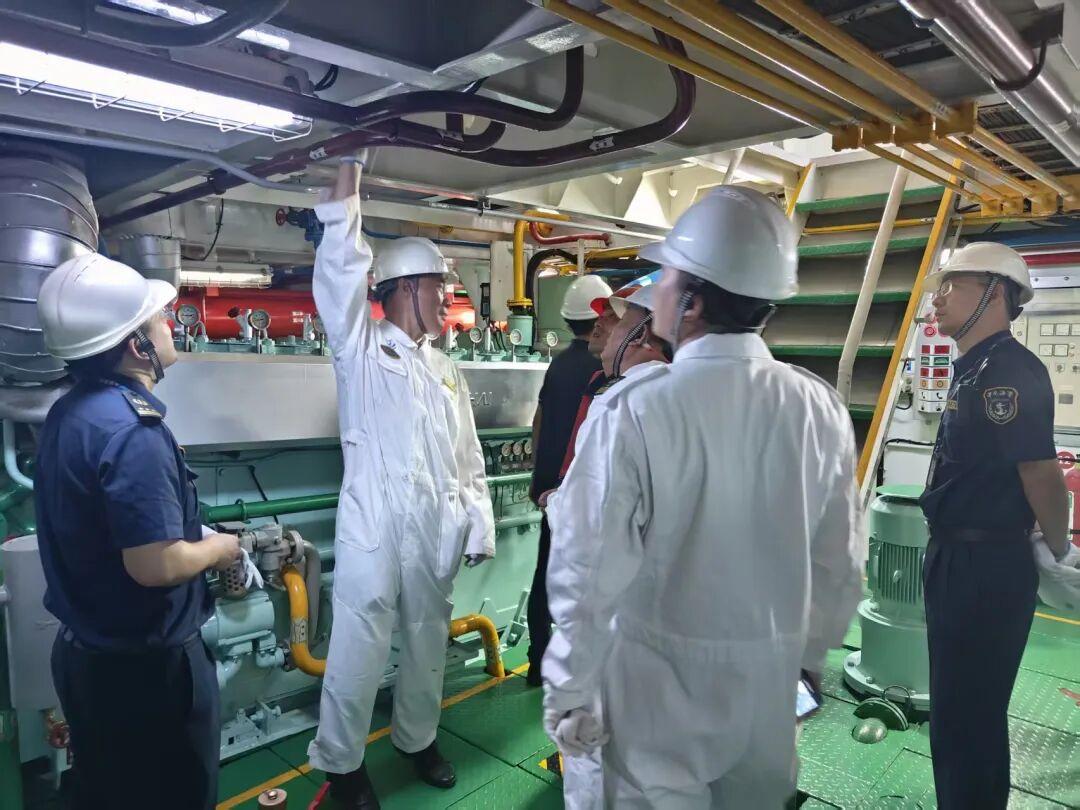
The pilot practices in the three regions have achieved three major transformations: the regulatory model has shifted from "separate boarding and independent operations" to "one-time boarding and collaborative governance"; the determination standards have shifted from "department-specific criteria" to "joint assessments with unified standards"; and hazard management has shifted from "separate rectifications with no connection" to "list-based management with an integrated closed loop."
While the pilot has achieved phased results, challenges have also emerged during the reform process: ships in different port areas are dispersed, making joint boarding at remote berths difficult to coordinate; significant differences exist between coastal and inland ship types, requiring further refinement of joint inspection details for special ship types; and some small and medium-sized shipping companies and individual shipowners still lack awareness of the "joint inspection on the same ship" policy and proactive cooperation.
Iterative Deepening: Gradually Replicating and Promoting Pilot Experiences Across the Province
Next, the Jinan Ship Technology Service Center in Shandong Province will build on the pilot practices in the three regions to continuously iterate and optimize the outcomes of the "joint inspection on the same ship" reform.
First, the standardized work system will be further improved, unifying joint inspection guidelines for different coastal and inland ship types, refining collaborative inspection processes for special ships, and addressing institutional shortcomings. Second, the scope of joint inspections will be expanded, gradually incorporating scenarios such as intermediate inspections, certificate renewal inspections, and dock repairs into the "joint inspection on the same ship" framework. Third, party-building will continue to guide business collaboration, with regular cross-training and joint defect case discussions to unify standards for inspection and safety checks. Fourth, policy outreach to shipping companies and shipowners will be intensified to broaden awareness of the reform.
Based on the mature pilot experiences in Dongying, Binzhou, and Weifang, the Jinan Ship Technology Service Center will compile a clear, practical, risk-controlled, and enterprise-friendly standardized "joint inspection on the same ship" work template, creating a replicable and scalable model for collaborative ship inspection governance in Shandong. This model will be gradually promoted across the province's ship inspection system.
Through efficient collaboration between maritime and ship inspection authorities, the institutional transaction costs for shipping companies will be continuously reduced, the intrinsic safety level of ships will be comprehensively improved, and the foundation for waterway traffic safety will be strengthened, ensuring the high-quality development of Shandong Province's inland and coastal shipping industry through effective administrative service reforms.
-
Explore the Century's Engineering, Spreading the "Water Charm of Eight Guilin"4600
-
Yancheng Maritime Escorts "Made in Yancheng" Cars Setting Sail Overseas4842
-
The Yuan River Longweizhou Hub Project has achieved a phased breakthrough in construction.3136
-
Yantai Port reaches new heights! China-Africa bulk cargo shipping volume surpasses 8 million tons.4743
-
The Red Boat Reflects the Original Aspiration, the Azure Writes the Commitment—China Classification Society Zhejiang Branch Leads High-Quality Development with High-Quality Party Building4518